
Best Western UX Foundation: Building the UX Playbook that Unified an Enterprise Digital Experience.
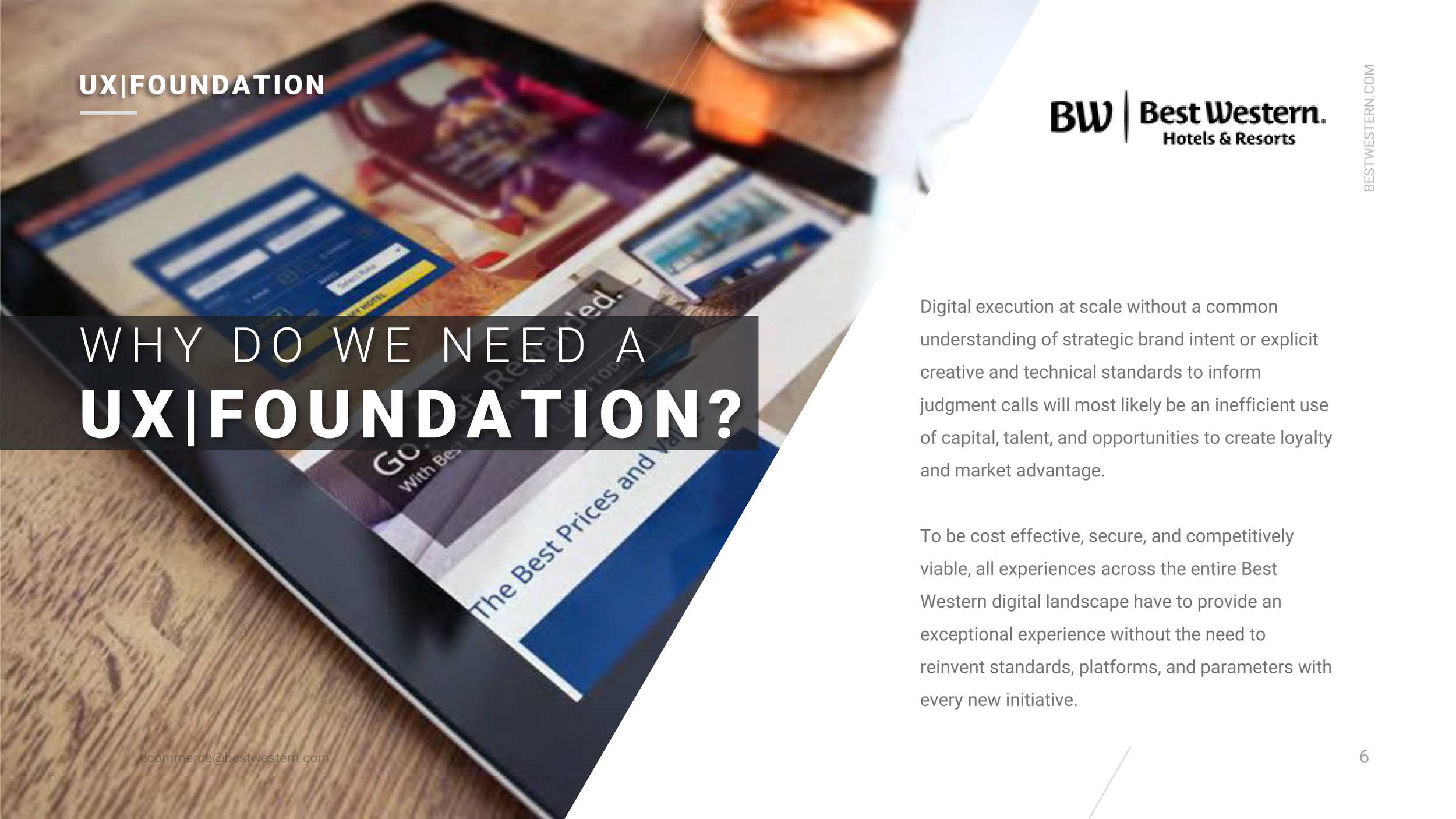
When I joined Best Western, multiple digital teams were designing websites, mobile experiences, loyalty products, and marketing campaigns without a single source of truth for user experience. Every project interpreted UX differently, creating inconsistent customer experiences, duplicated work, and unnecessary design debates.
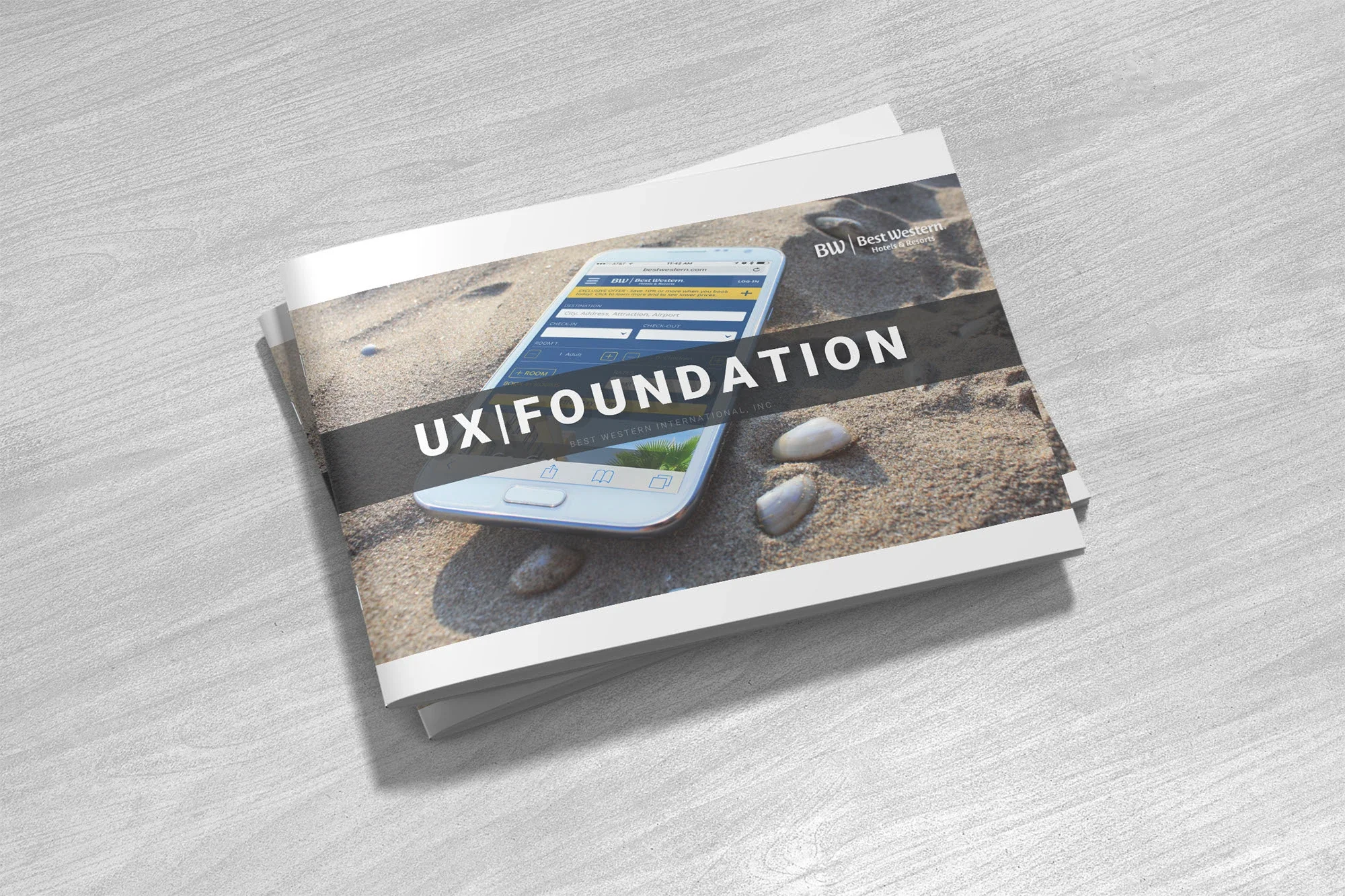
To solve this, I led the creation of the Best Western UX Foundation—a comprehensive design framework that established a shared philosophy, design principles, usability standards, accessibility requirements, and reusable UI patterns across the organization.
More than a style guide, it became the blueprint for how digital experiences were conceived, designed, and evaluated across every customer touchpoint.
The Challenge
Best Western operates one of the hospitality industry's largest digital ecosystems, supporting millions of travelers across hundreds of properties and numerous digital products.
The organization needed to:
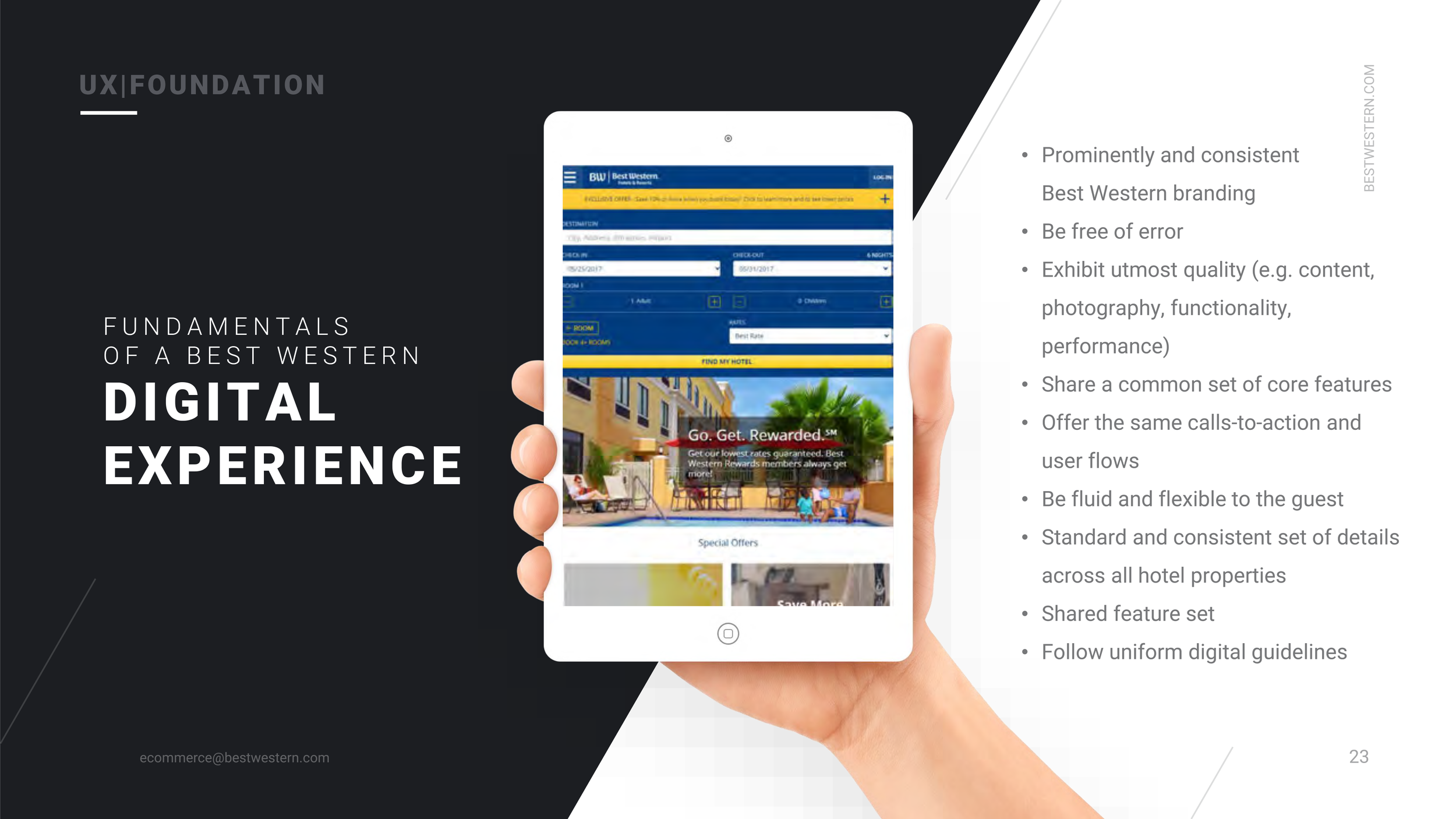
Create consistency across web and mobile experiences
Align UX, UI, development, marketing, and product teams
Reduce duplicate design effort
Improve usability across the customer journey
Build a scalable foundation for future digital products
Establish governance that balanced innovation with brand consistency
Without a common framework, teams often solved the same problems differently, slowing delivery while creating inconsistent guest experiences.
My Role
As Senior Manager of Digital Experience, I led the strategy, structure, content, and creative direction of the UX Foundation.
My responsibilities included:
Defining the overall UX vision
Creating enterprise UX principles
Developing design standards and governance
Establishing accessibility guidelines
Building reusable design patterns
Documenting usability best practices
Aligning cross-functional stakeholders around one methodology
This initiative required collaboration across product management, engineering, UX designers, visual designers, researchers, content strategists, and executive leadership.
The Solution: Building the UX Foundation.
To create consistency across Best Western's digital ecosystem, I developed a comprehensive UX Foundation that became the organization's single source of truth for digital experience design. The framework was organized into five core areas—UX Principles, Design System Foundations, Usability Framework, Accessibility, and a Team Operating Model—providing teams with a shared approach to designing, building, and evaluating digital experiences while ensuring every product delivered a consistent, guest-centered experience.
UX Principles
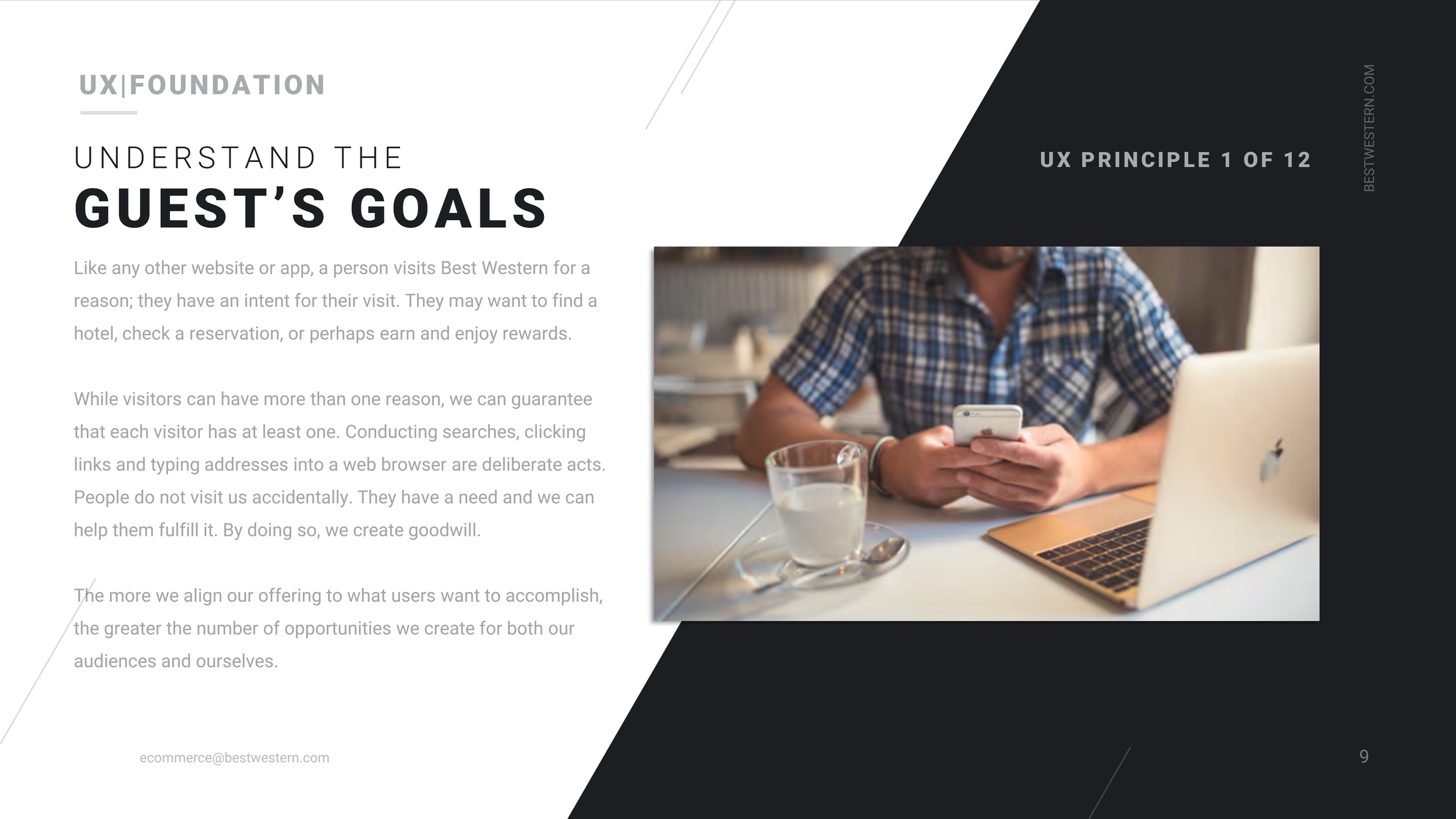
At the core of the UX Foundation were twelve guiding principles that established a shared philosophy for designing digital experiences across Best Western.
These principles—including understanding guest goals, creating frictionless interactions, personalizing experiences, reducing user effort, anticipating errors, and maintaining consistency across channels—provided teams with a common framework for evaluating design decisions and prioritizing customer needs.
Beyond establishing standards, the UX Principles served as an educational tool for the broader organization. At a time when UX maturity varied across teams, the document helped demonstrate the strategic value of user experience and its direct impact on customer satisfaction, conversion, and brand loyalty.
By connecting design decisions to business outcomes, it created a shared understanding of UX best practices among product managers, marketers, developers, executives, and designers, fostering a more customer-centric culture across the organization.
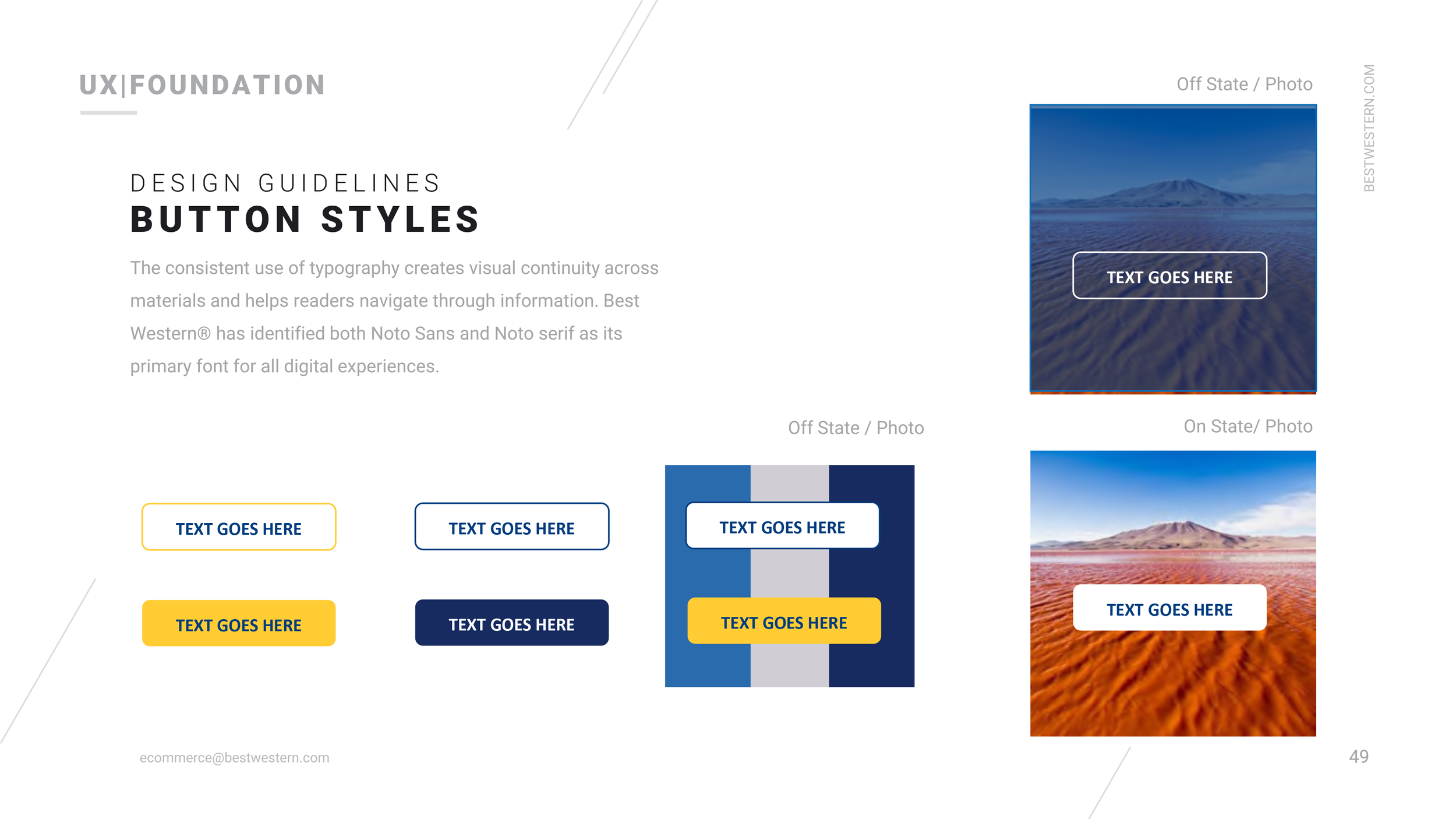
Design Systems Foundation
I established a comprehensive design system that standardized the visual and functional building blocks used across Best Western's digital products.
The framework included guidelines for color, typography, navigation, content hierarchy, UI components, iconography, buttons, responsive layouts, and brand expression to ensure a consistent user experience regardless of platform. By documenting reusable patterns and best practices, the design system reduced design and development effort, accelerated project delivery, and empowered teams to focus on solving customer problems instead of recreating common interface elements.
This version emphasizes that you weren't just documenting styles—you were creating a scalable system that improved efficiency and consistency across the organization, which is exactly what hiring managers for Creative Director and UX leadership roles want to see.
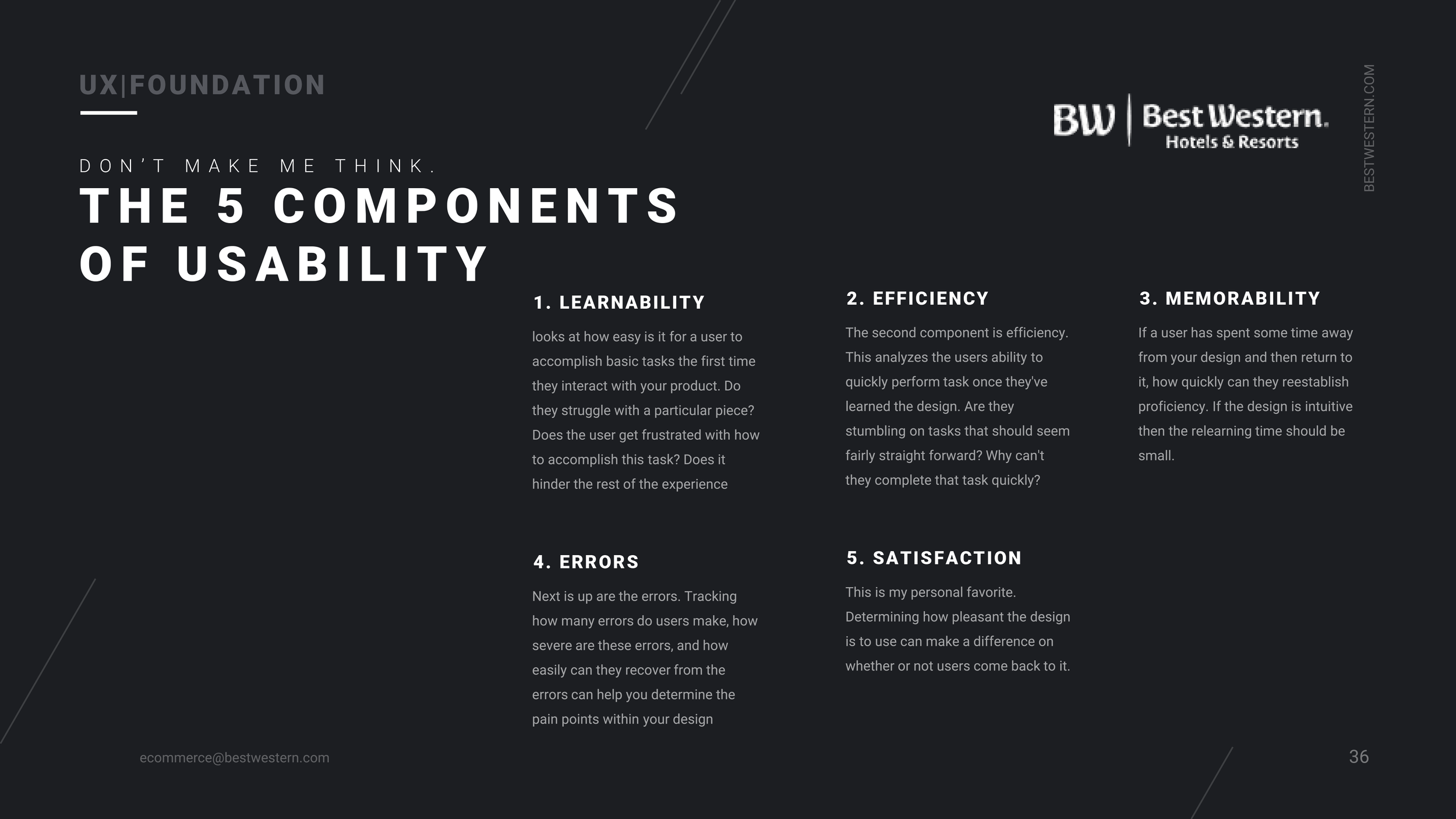
Usability Framework
To ensure every digital experience was intuitive and easy to use, I established a usability framework built around five core principles: learnability, efficiency, memorability, error prevention, and user satisfaction.
These standards provided teams with a consistent method for evaluating designs throughout the product lifecycle, helping shift conversations from subjective opinions to measurable user outcomes. By embedding usability into the design process, the framework improved consistency, reduced friction, and reinforced a user-centered approach to product development across the organization.
This version ties the framework back to process improvement and decision-making, making it clear that you created a repeatable methodology—not just a set of usability guidelines.
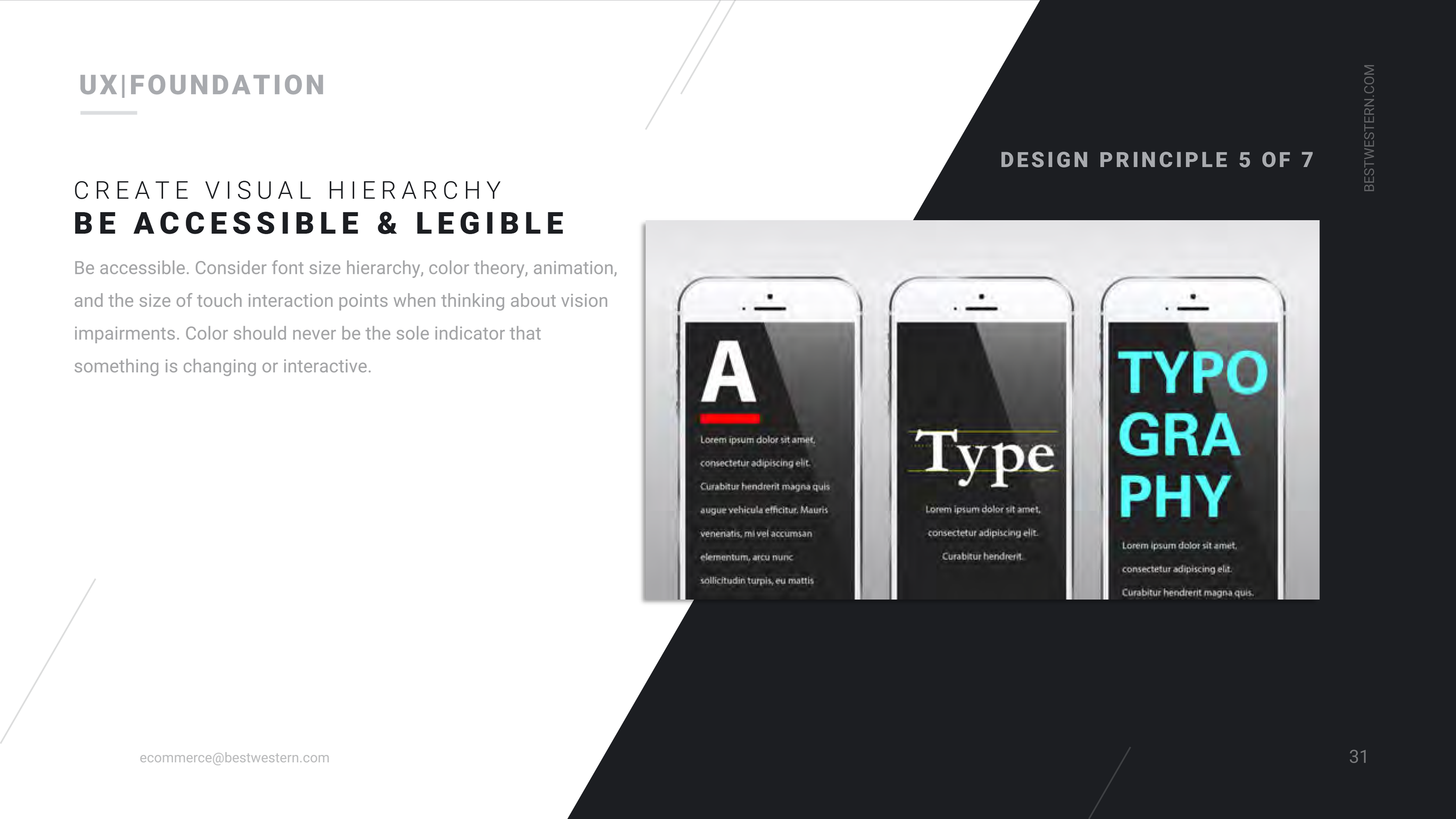
Accessibility
Accessibility was embedded into the UX Foundation from the beginning, ensuring inclusive design was a core requirement rather than an afterthought. I established accessibility standards based on WCAG 2.0 guidelines, providing teams with best practices for color contrast, typography, keyboard navigation, form design, image alternatives, and semantic page structure. To reinforce these standards,
I introduced Siteimprove as an enterprise accessibility monitoring and testing platform, enabling teams to identify, prioritize, and resolve compliance issues throughout the design and development process. This proactive approach helped create more inclusive digital experiences while improving overall usability and supporting long-term accessibility governance.
This version positions you as someone who not only defined accessibility standards but also implemented the tools and processes needed to operationalize them across the organization—a strong example of design leadership.
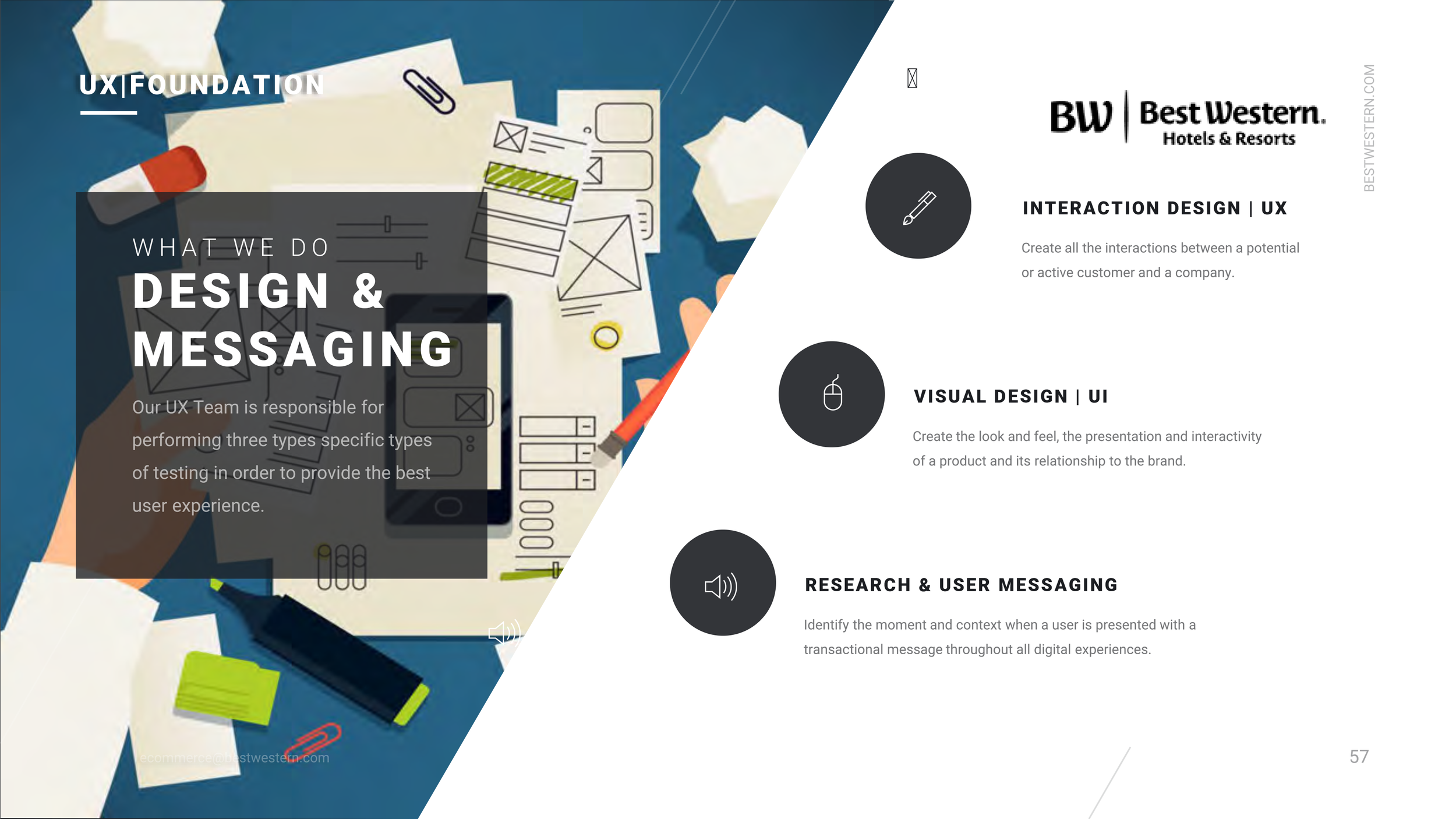
Team Operating Model
The UX Foundation also clarified how UX, UI, content strategy, testing, and research worked together throughout product development.
This helped teams understand responsibilities while creating a repeatable design process.
Business Impact
Although the document itself wasn't the product, it became the foundation for nearly every digital initiative that followed.
The UX Foundation helped Best Western:
Standardize digital experiences across multiple products
Reduce design and development rework
Accelerate project delivery through reusable patterns
Improve collaboration between design, development, and product teams
Increase consistency across guest touchpoints
Create a scalable governance model for future digital initiatives
Establish accessibility and usability as organizational standards
Most importantly, it shifted conversations away from personal design preferences and toward customer-centered decision making.